
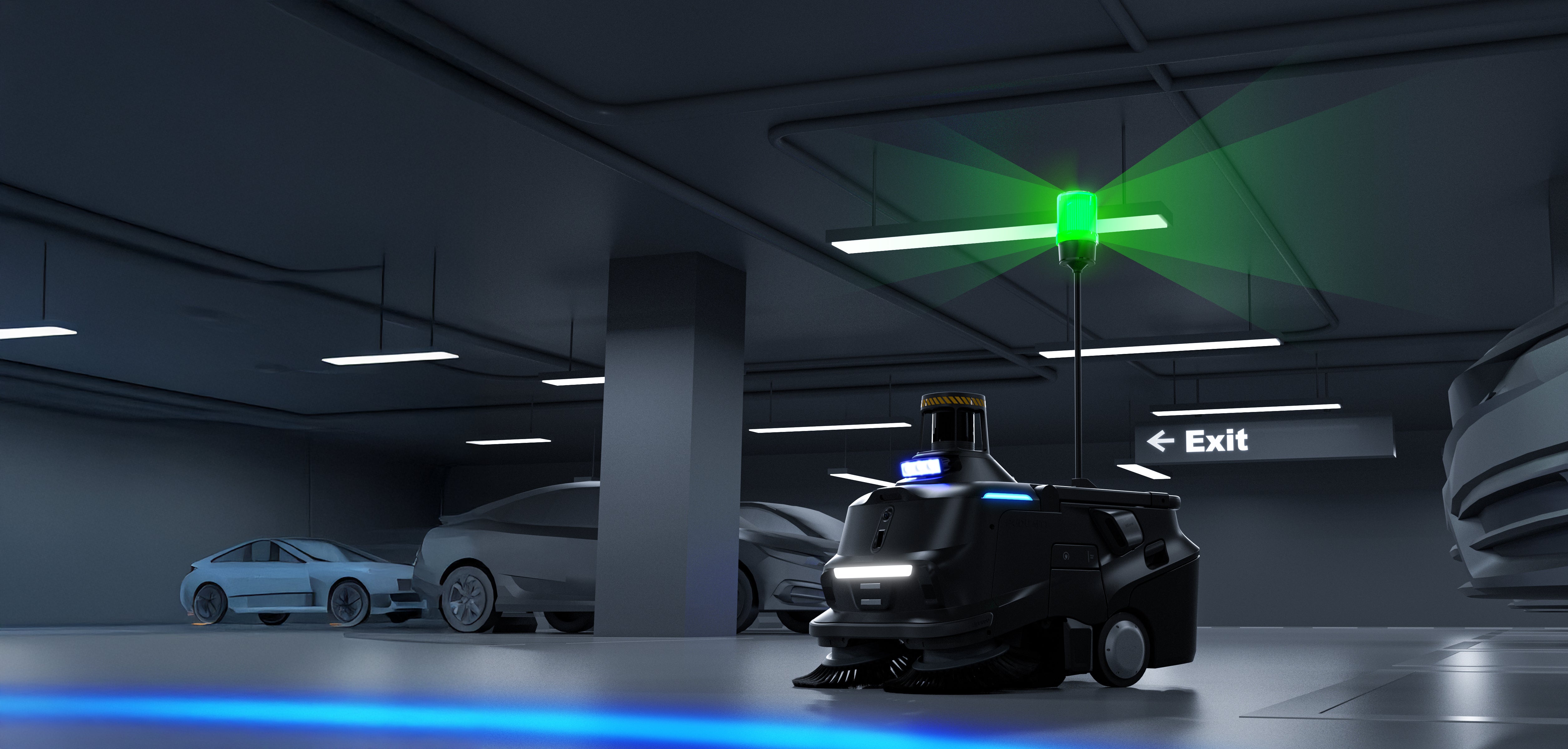
“Is there anything a robot can’t do?”
“Is there anything a robot can’t do?” It’s a question that’s often asked as automation becomes more visible across everyday operations. In the world of commercial cleaning, robotics has moved rapidly from early-stage novelty to practical, high-performing solution. But while the technology has advanced significantly, understanding how far it has come – and where its limits still lie – is key to making the most of it.
From smarter navigation to AI-driven efficiency, today’s cleaning robots are transforming how spaces are maintained, while still working best alongside the people who keep standards high.
Here we example more…
Early cleaning robots were notorious for getting stuck in corners, colliding with objects and failing to clean up the edges of rooms. Does this still occur with some models?
Early robotic cleaning machines did regularly struggle with navigation. Limited sensor technology meant occurrences of collisions with objects, becoming trapped in tight spaces, missing edges and corners was quite common.
While some entry-level or older models may still encounter these challenges, modern commercial cleaning robots have evolved significantly. Today’s machines use advanced navigation systems and multiple sensors to map their environment, recognise obstacles and adjust their cleaning path dynamically. As a result, issues such as getting stuck or repeatedly missing areas are far less common.
How have such issues been addressed?
The most significant improvements have come through advances in sensor technology, mapping capability and software intelligence.
Many modern robots combine technologies such as 3D LiDAR, RGBD cameras and ultrasonic sensors to build a detailed map of their surroundings. This allows them to plan efficient cleaning routes, avoid obstacles in real time and operate safely in busy environments.
The improvement in these sensors along with ever more complex algorithms enabled by faster chips has led to improvements in edge-cleaning performance, with machines getting closer to edges and thus improving their overall efficiency. The increased computing power of today’s robots has also improved their problem-solving ability when faced with obstacles, enabling them to re-calculate cleaning paths to effectively and successfully complete their tasks.
Has the evolution been rapid?
Yes – development has accelerated considerably in recent years. Increased customer interest, driven by a number of factors including increased labour costs, the need contractual compliance and the post-pandemic desire to have cleaning more visible to customers, has led to a greater number of suppliers entering the market, which in turn drives creates competition, leading to ever-improving technology.
Manufacturers are responding quickly by improving autonomy, ease of use and data reporting. Customers increasingly expect robots to integrate smoothly into their operations and provide clear performance insights.
What are the latest capabilities of robots?
Today’s commercial cleaning robots offer a range of intelligent features designed to maximise efficiency and autonomy. These include:
- AI capabilities
- Multi-robot collaboration
- Advanced navigation and route optimisation
- Increased multi-sensor accuracy for enhanced obstacle avoidance
- Automatic charging and water refilling
- Improved remote monitoring and reporting.
These capabilities make robotic cleaning effective in an increasing number of spaces - from smaller retail environments, educational settings and healthcare facilities to very large logistics sites.
What are the current limitations of robots?
Despite their growing sophistication, robots are not designed to replace human cleaners entirely. They are most effective at repetitive floor cleaning tasks in open spaces.
Challenges can still arise in highly cluttered environments or where detailed cleaning is required, such as tight corners, stairs or vertical surfaces. Robots are now sweeping up to the edges of walls but are not yet delivering deep cleans in this area.
With the ability ability of robots to recharge and refill themselves mid-task the issue of battery life is often not an issue, but when the environment or machine type does not allow the utilisation of this technology then the limitations of battery life ned to be considered.
For this reason, robotic cleaning is often most successful as part of a hybrid approach, where robots handle routine floor cleaning while staff focus on detailed or responsive tasks, scheduling in a small amount of time to refill/recharge the robot.
Are efforts being made to overcome these limitations?
Yes, manufacturers are continuing to improve areas such as object recognition, edge cleaning and adaptability in dynamic environments. Battery development is advancing at pace – with larger capacities and shorter charge times being the goal for manufacturers. However, the industry increasingly recognises that the goal is not to eliminate the human element but to support it.
As Peter Jones, robotics expert at Robert Scott Robotics, explains:
“Robotic cleaning technology has developed rapidly in recent years and continues to evolve. The most effective deployments are those where robots work alongside cleaning teams, taking care of repetitive floor cleaning so staff can focus on tasks that require attention to detail and human judgement.”
What automated cleaning solutions do you offer?
Through Robert Scott Robotics, we provide a range of autonomous floor cleaning solutions designed for commercial environments. These combine intelligent navigation, automated charging and refilling, and remote management tools to deliver consistent cleaning performance while reducing the manual workload on cleaning teams.
Our focus is on delivering practical robotic solutions that integrate easily into existing cleaning operations, helping organisations improve productivity while maintaining high hygiene standards.
How smart will tomorrow’s robots become?
Robotic cleaning technology is likely to become increasingly intelligent and connected. Future machines may incorporate more advanced AI capabilities, allowing them to better recognise surfaces, adapt cleaning methods automatically and integrate with smart building systems.
However, the future of cleaning will almost certainly remain collaborative, with automation supporting skilled cleaning professionals to deliver higher standards of hygiene and efficiency.
Share:
Robert Scott reveals the next generation of MT1 Sweeper Robotics